Middle School Science Classroom
Meet me in the Middle School
Science Classroom
In the world of science, solving problems requires a systematic approach. Scientists employ a method that begins with identifying a problem, then developing a testable question and formulating a hypothesis to predict outcomes logically. They meticulously follow procedures, control variables, gather data, analyze results, and communicate their findings. The scientific protocols, or a similarly structured methodology, are the backbone of scientific inquiry and discovery, but what if we applied this same idea to the challenges of teaching middle school science? Is it possible to develop a framework that, once executed, could lead to knowledgeable and confident learners? The short answer is probably a tentative no. I submit that it is actually not impossible.
Consider a few of the unsolved scientific queries of our time that have not been solved with absolute certainty. Losing weight is one of those. There is much science that yields a frenzy of takers to the next best way to lose weight. The reason for this is the variables. There are countless variables when considering the human body, and though many become rich selling their promises, it's difficult to truly and scientifically dismiss a one-size-fits-all approach. That being said, a weight-loss program can succeed, and the individuals who do it become the new face of weight loss and begin perpetuating their version of the issue, which, of course, aims to drive more sales. If experts sat down to discuss the basic framework, they would likely agree on a few constants: eating less, water intake, exercise, etc.
Can we tackle middle school science education using the scientific method or something similar?
While it may seem daunting and a bit silly, with an infinite number of variables that are difficult to control, there lies a unique opportunity to apply each step of this method to create a shared, concise path forward. Can educators, parents, and adolescents sit down and create a similar framework with a few constants as the undercurrent? Could these conclusions be applied to not just pubescent survival but also early adulthood success?
I say YES. Absolutely.
I submit that the foundations for such success would be: Empowerment through genuine rapport building via compassion, high expectations, accountability, and validation. In our culture, there is a looming collective narrative about adolescents that is generally negative. I will illustrate such narratives and offer ways to embrace more positive narratives. Many of the teachers I have encountered along my career path really do love working with the students, but along with the teachers who are trying really hard come a lack of understanding, a lack of pro-social skills to handle hard situations, administration expectations that seem to frustrate the "happy teacher," and a communication gap between teachers, students, parents, and administration. The issues facing middle school science education are not insurmountable. These issues can be conquered. I have seen much success, and there is more messaging I wish to convey. The key is in our focus. The focus? Yes. The students. That is always the focus. When each of the above-mentioned entities focuses on students, we all win.
Remember YOUR Science Classroom?
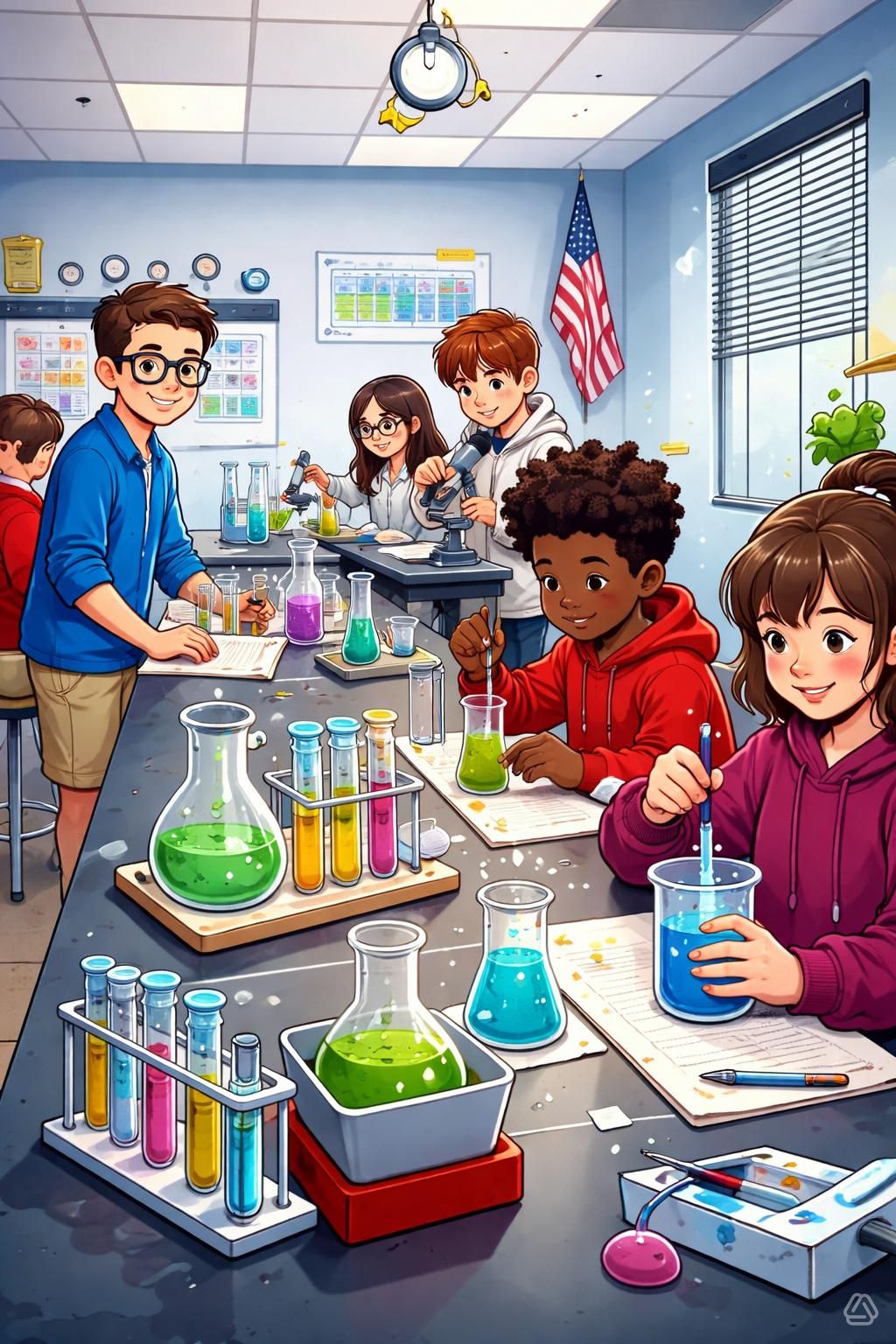
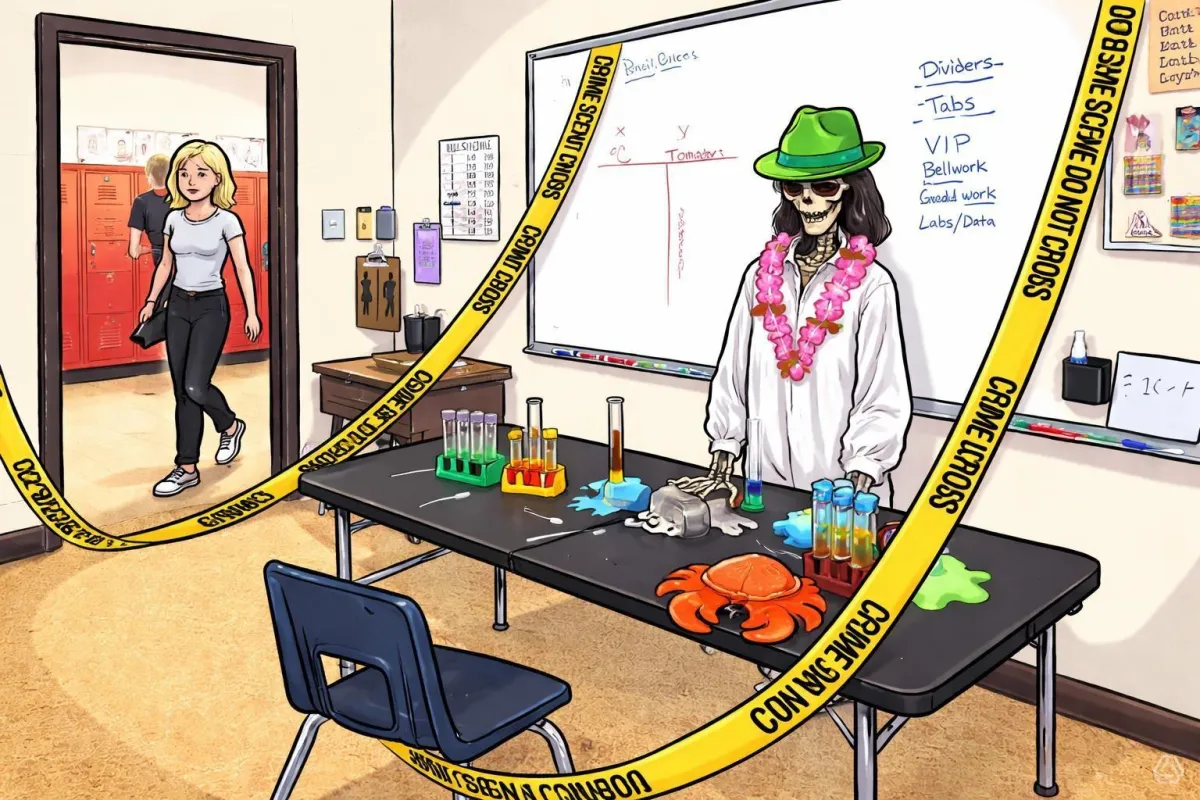
Although many media outlets portray science class as an exciting outlet filled with explosions, messy experiments, and enthusiastic teachers, the reality is quite different. Students often feel disillusioned when they realize that the class involves more than just fun activities; it requires significant effort. It requires labs that mandate reading and adherence to lab procedures, a large vocabulary, and critical thinking, accompanied by appropriate expression of that thinking. Teachers also experience this disillusionment, as they face students' frustrations while grappling with their own challenges in engaging middle schoolers.
This dynamic can lead to a cycle of apathy and enthusiasm, affecting both students and educators.
All the while, science scores (U.S. Department of Education, Institute of Education Sciences, 2024) nationwide remain low and show little growth. Recent nationwide data show 31% proficiency on science tests. And to pour salt in the wound, the numbers have decreased over the past decade. Of course, we can attribute some to the COVID-19 pandemic, but we still have a problem. The proficiency numbers hover in the mid-low 30%'s. (U.S. Department of Education, Institute of Education Sciences, 2024)
When Sputnik was launched by the Soviet Union, the United States responded by launching a more dedicated role in our own country's science efforts. The efforts resulted in the legislation of the National Defense Education Act of 1958, which allocated billions of dollars for science education. The money provided many new technologies (overhead projectors, lab equipment, etc) throughout classrooms in the United States. Additionally, the National Science Foundation supported overhauls of science education and curricula. The idea was to prepare high school students for future careers in science.
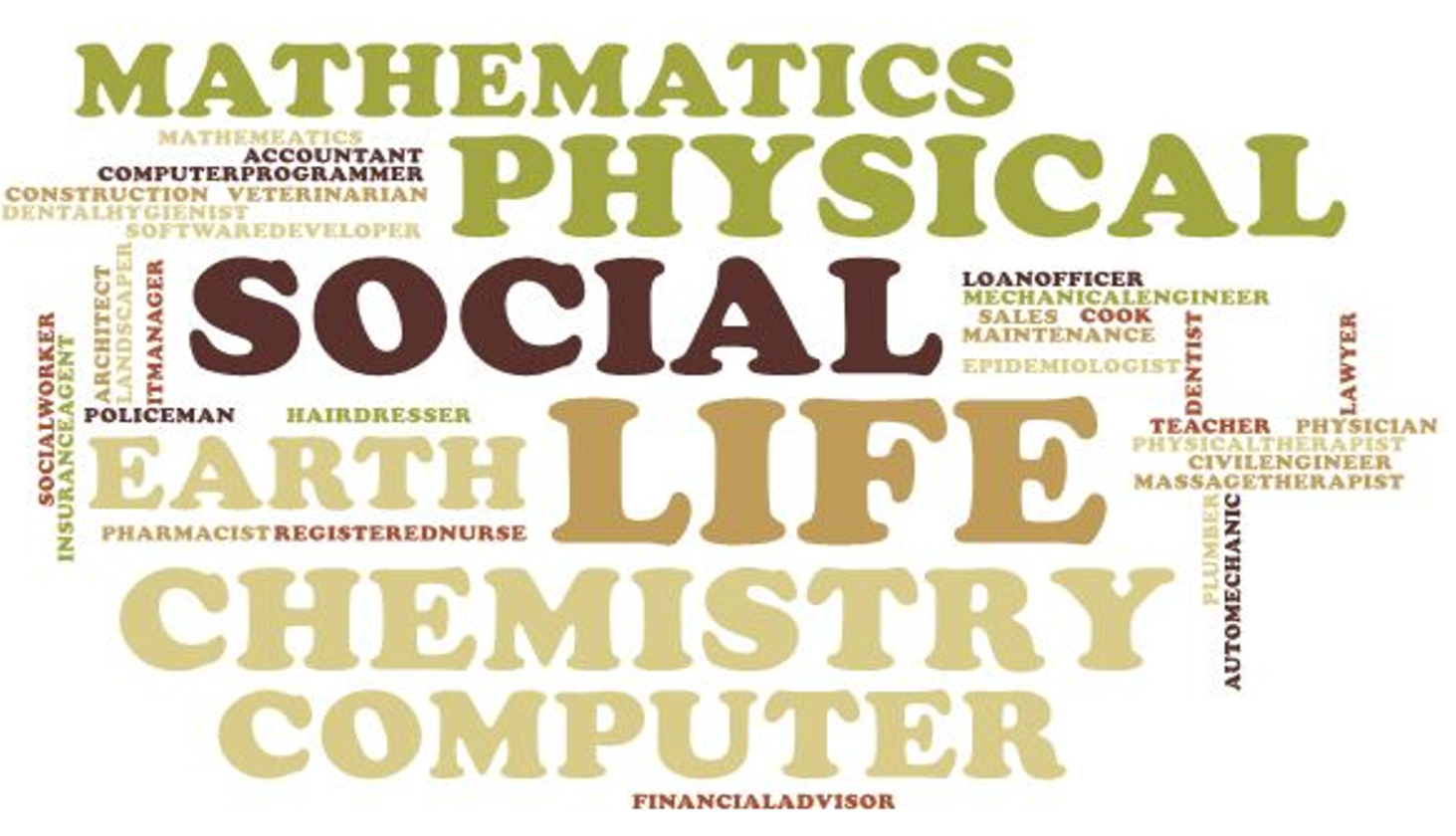
A country that touts how important science and math are and then does not truly hone in on how to address the issue is a big deal. Even before the rise of the catchphrase and acronym STEM (Science, Technology, Engineering, Math), the prevalence of science-related jobs was high and has always been. As a science teacher, I have sent my students home with an assignment in their first week to inquire about their parents' careers and livelihoods.
Not one parent ever reported that their job involved NO science.
The STEM job market is only growing, pushing the need to address this problem. STEM is thrown around for commercial marketing purposes, but in the public school arena, it carries much less weight.
STEM is considered the "fun" after-school activity. I don't see it being taken seriously as a collective effort. One teacher will be serious, while another is not. Sometimes the principal is very ambitious and supportive of the cause. But when larger institutions don't acknowledge these efforts, the same way they do for language arts and mathematics, the funding is either partially or entirely wasted. Let me give an example.
Based on my love for teaching science and my frustration with the time constraints in the school system, I developed a science lab on wheels to take into the community. Students always complained about not getting to do experiments, and I understood that and wished for more opportunities for them. My Science Coach on Wheels business offered a menu of choices that kids or anyone could order on the spot and conduct an experiment at the tables I provided.
I stocked so many supplies, and it was relatively successful considering I did not advertise. I reserved spots at the local park near the zoo, and a waterfront park where many people go for family activities and leisure. Kids enjoyed making fluffy slime, which was the most popular, and they could take it home in a neat little container. Some dabbled in the dry ice bubble station, which showcased the science of sublimation. Fizz Inflation was a favorite because kids got to see a balloon inflate using the gas produced by vinegar and baking soda. Besides trying my hand at running my own business, my goal was two-fold.
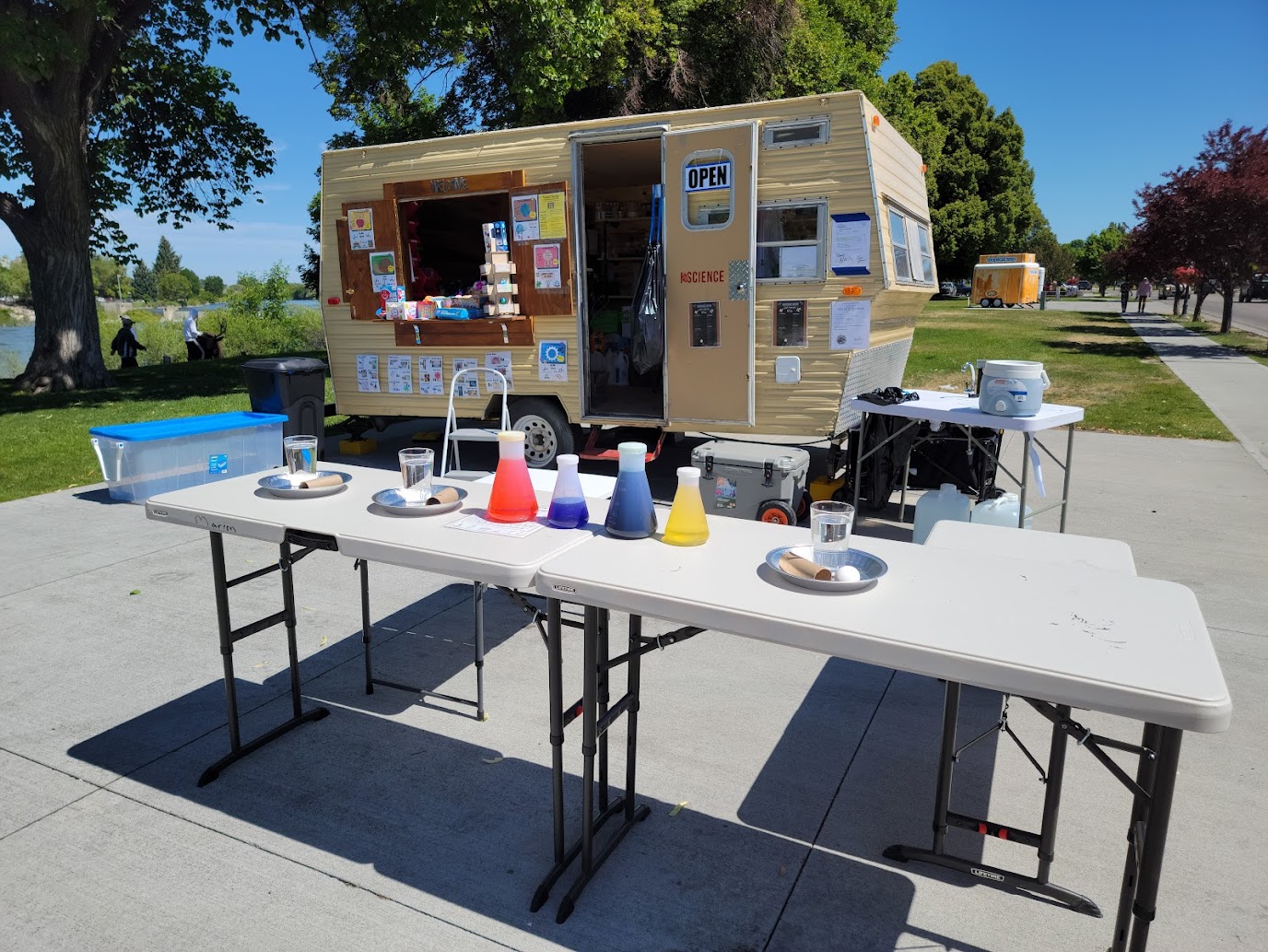
I wanted to provide kids with the opportunity and access to get hands-on with science at will. I figured if they had to wait for the right day in science class, they may lose interest, and they should have an outlet for their own at-will exploration. Secondly, I wanted to normalize basic science equipment, procedures, and their accompanying vocabulary. My students have always had trouble distinguishing among a flask, a cylinder, and a beaker, just for starters. I ensured that we used only real scientific tools and metric measurements. As the business unfolded, I had the first mission nailed. The second, not so much. It turns out that kids- especially at-will customers- want the fun of the experiment or experience. The learning was not important to them.
Sure, I knew that implicit learning was happening, but as a teacher, I wasn't satisfied enough to keep the business running. It was clear that for-profit businesses have no oversight over a learner's outcome. The objective of a good business is to make money, as it should be. The customer is the sole owner of the experience, and therefore, the second mission in my business plan was flawed.
In school, the model is exactly the opposite, as it should be. There is no pressure to increase the bottom line, but the at-will discovery and natural curiosity risks being crushed. Students who attend science class in a school setting have a much better opportunity for leverage in the learning arena. Efforts in schools are deliberate and measured. Students are encouraged to perform well, and good teachers should be providing adequate opportunities for them to enjoy the content and assess whether it moves the knowledge and comprehension needle. Teachers should balance the "fun" approach with the "serious work" approach for students to anticipate and experience a healthy dose of science learning. Whether this is happening is a different thing entirely.
Middle school is where science becomes a more structured and rigorous discipline than reading and math, which have been heavily drilled since kindergarten. Is this a problem? We focus on math competency and language arts competency, but introduce science as a novel consideration. Teachers employ weekly readers about science, and I've heard so many times that there is "no time for science."
What is being done to solve this issue? There are many issues facing students and teachers, such as anxiety, too much or too little parental involvement, peer pressures, electronic devices, and the dreaded pre-pubescent and irrational kids who need to control themselves better. I believe this is all solvable, and it's not as hard as it may seem.
Imagine a middle school science classroom where both teachers and students thrive, where joy and curiosity replace frustration and disengagement, and where we can maximize educational outcomes while minimizing effort and stress. Imagine this taking place inside the schools we already have, without needing to seek a better facility, starting a new school, or opening a small business.